W
Español Abajo Venezuela is a country in South America, with coastlines along the Caribbean Sea and the Atlantic Ocean, as well as territory within the Amazon region.Its capital is Caracas, and its landscapes are incredibly diverse, ranging from beaches and islands to mountains, rainforests, vast plains, and mighty rivers. This natural diversity is also. an important part of the country’s cultural identity.Before the arrival of the Spanish, the region was home to numerous Indigenous peoples.…
W
Español Abajo Uruguay is a small country in South America, located between Argentina and Brazil, with coastlines along the Atlantic Ocean and the Río de la Plata. Its official name is the Oriental Republic of Uruguay, and its capital is Montevideo, a city that serves as the country’s main political, economic, and cultural center. Uruguay is known for its vast grasslands, Atlantic beaches, and coastline along the Río de la Pata.The history of Uruguay goes back much further than the arrival of…
W
Español Abajo Saint Vincent and the Grenadines is an island country in the Caribbean, part of the Lesser Antilles, located between Saint Lucia and Grenada. It is made up of 32 islands, islets, and cays, with Saint Vincent being the largest and northernmost island. Its capital is Kingstown, located on the southwestern coast of the main island. The country is known for its volcanic landscapes, mountains covered in tropical vegetation, white-sand beaches, and crystal-clear waters.Before the…
W
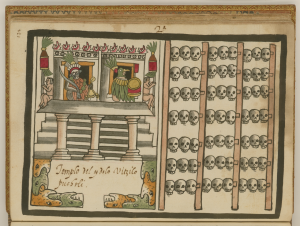
Español Abajo Mexico’s relationship with death has a precolonial history that is reflected in various ritual practices of Mesoamerican peoples. One example is the Huey Tzompantli of Mexico-Tenochtitlan, a structure associated with the Templo Mayor, where the skulls of sacrificed individuals were displayed. Its purpose had religious and political significance related to the Mexica worldview, in which sacrifice was part of the relationship between human beings and the gods.In 2015, archaeologists…
W
Español Abajo Trinidad and Tobago is an island country located in the Caribbean Sea off the coast of Venezuela. Although the two main islands are Trinidad and Tobago, it also includes several smaller islands. Its official language is English. It gained independence from the United Kingdom in 1963, but did not achieve its status as an independent republic until 1976. Besides being a major tourist destination, it also has large oil and gas reserves.Trinidad and Tobago reflects its historical…
W
Español Abajo Suriname, Republic of Suriname (English), Republiek Suriname (Dutch), Sranankondre (Sranan Tongo), is a country located in South America. It is part of the region known as the Guyanas, along with French Guiana and the Republic of Guyana (formerly British Guiana); however, this territory was colonized by the Dutch from the Netherlands, hence it was called Dutch Guiana. Its official language remains Dutch, although Sranan Tongo, the creole language of Suriname, also plays a…
W
Español Abajo The Ruins of Copán are one of the most important archaeological sites of the ancient Maya civilization in Honduras, and we should not forget that Maya culture is still very much alive today.The Ruins of Copán are located in the Copán Valley in western Honduras, near the border with Guatemala. During the Classic Period, Copán became an important political, civic, and religious center, as well as one of the main cultural centers in the southeastern Maya region. Its importance goes…
W
Español Abajo Saint Barthélemy, also known as Saint-Barthélemy or Saint-Barth, is a small Caribbean island that is part of the French Antilles. It was called Ouanalao by the Amerindians, which, although it has not been fully confirmed, may mean fertile land. Thus, Saint Barthélemy, like many Caribbean islands, is the epitome of paradise; however, there is something that makes it exceptional, and that is the importance it has been given as a gastronomic and culinary center.With an area of 8.5…
W
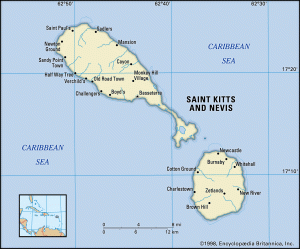
Español Abajo The island of Liamuiga — “fertile land,” according to the Carib Indigenous people who inhabited it — was named Saint Christopher in 1493 by Christopher Columbus on his second voyage to America. It was colonized by Europeans in 1623, when Thomas Walker established the first English settlement in the Caribbean. The neighboring island, Nevis, named after its snow-covered volcano, was colonized five years later. Once the extermination of the Carib people had been carried out, the…
W
Español Abajo In this month, when the independence of so many countries is commemorated, perhaps we could ask ourselves: why are independence movements important?Throughout history, peoples from different cultures have sought to regain or take control of certain territories, sometimes territories where they have lived for many generations and wish to preserve, as well as strengthen their identity in response to pressure from other peoples. They have also done so because they want to establish…
W
Español Abajo Commemorating Hispanic heritage goes beyond celebrating. It means talking about the common identity among Latin Americans, which does not mean saying that all the peoples of Latin America are the same. On the contrary, one of the main characteristics of our region is its enormous cultural, linguistic, historical, and social diversity. From Mexico to Argentina and Chile, passing through Central America, the Caribbean, and the countries of South America, there are different ways of…
W
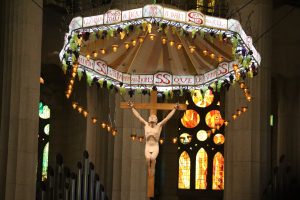
Juan Manuel Mendoza Briseño September 8, 2026 Español Abajo The Sagrada Familia in Barcelona, also known as the Basilica of the Sagrada Familia, is the tallest temple on Earth, reaching 172.5 meters at its highest point, the Tower of Jesus Christ. This tower was recently topped with a cross and blessed by Pope Leo XIV on June 10th of this year. Antoni Gaudí designed the tower so that it would not exceed the height of Montjuïc, which stands at 173 meters. In this way, he avoided surpassing what…
W
Español Abajo Nélida Ayay Chilón was born in 1984 in the agricultural community of Porcón, Peru.When she was seven years old, a multinational company established operations in her area and contaminated springs and lagoons with cyanide and arsenic as a result of the mining extraction process.After earning her law degree in Cajamarca, she became involved in struggles to defend the territory, including the fight to protect Quilish Hill, a sacred place for the Quechua people.The Quechua speak the…
W
Español Abajo Barbados is a Caribbean island with a rich cultural tradition shaped by its history of different peoples, traditions, and ways of life. Its history is deeply connected to British presence, but also to the African roots that form an essential part of Barbadian culture. This combination can be seen in its architecture, music, celebrations, and food. During the colonial period, the island of Barbados held a prominent position in terms of maritime routes, as it was a strategic point…
W
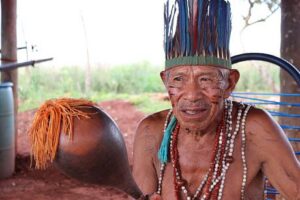
Español Abajo Guarani Myth About The Origin Of LanguageThe true Father Ñamandú, the First One, from a small portion of his own divinity, from the wisdom contained within his own divinity, and by virtue of his creative wisdom, caused flames and a faint mist to come into being.Having risen up (assuming human form), from the wisdom contained within his own divinity, and by virtue of his creative wisdom, he conceived the origin of human language. Our Father created the foundation of human language…
W
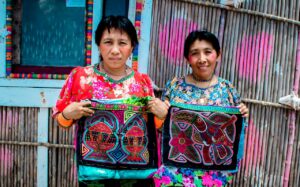
Español Abajo The Gunadule, also known as Kuna, Dule, Tule, or Cuna, are an Indigenous people who have inhabited the northern part of South America since long before the European conquest, which has given them extensive knowledge that strengthens their culture. During the colonial period, chroniclers described them as playing a very important role in the trade of cacao, cinchona bark, and raicilla.Today they live in Panama and Colombia. In Panama, nearly 80,000 Gunadule people live there, most…
W
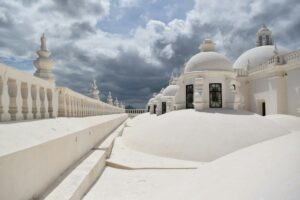
Nicaragua is one of those Central American countries that, although it sometimes gets left out of the region’s major tourist routes, has an incredible natural and cultural diversity. It lies between Honduras and Costa Rica, with coastlines along both the Pacific Ocean and the Caribbean Sea, and its territory is home to lakes, volcanoes, mountains, forests, waterfalls, and beaches. In fact, the Nicaraguan Tourism Board presents the country as the “Land of Lakes and Volcanoes,” a description that…
W
Español Abajo Mexico shares its northern border with the United States, although, interestingly, the southernmost international border of the U.S. is actually with Canada, just south of Detroit. Even though Mexico has existed as an independent nation for a little over two centuries, it is one of the most culturally, historically, and naturally rich countries in the Americas. This is due not only to its remarkable geographic diversity but also to its ethnic diversity, as more than 68 Indigenous…
W
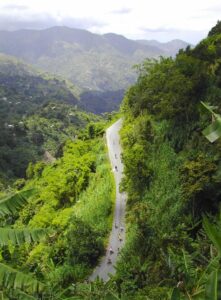
Español Abajo Jamaica gets its name from the Taíno language and means “land of wood and water.” Located in the Caribbean Sea, it is one of the Greater Antilles, along with Cuba, Borikén (Puerto Rico), and Hispaniola (Haiti and the Dominican Republic). The island is well known around the world not only for its stunning turquoise beaches but also for the lasting musical legacy of reggae and Bob Marley, whose music helped bring people together during one of Jamaica’s most politically divided…
W
Saint Lucia is one of those places that looks like it came straight out of a Caribbean postcard, but once you learn a little more about the island, you quickly realize its greatest attraction goes far beyond its beautiful beaches. This small island nation is part of the Lesser Antilles, in the Windward Islands, located between Martinique to the north and Saint Vincent and the Grenadines to the south. It is also a member of the Caribbean Community (CARICOM) and the Organization of American…
W
Español Abajo The United States is a multicultural country. Although it began as an independence project led by the settler-pilgrims of the Thirteen British Colonies on the northeastern coast of the American continent through a vote held in 1776 at the Continental Congress, which represented both the British Crown and the colonists, the vote favored independence in order to establish a new nation: the United States of America. The nation would be represented by the colors blue, red, and white.…