 T
The VL53LB is the smallest (4 mm x 1.8 mm x 1 mm) single-zone time-of-flight sensor to offer ranging performance from 5 mm to 8 m and a standby power consumption of 0.6 µW. In fact, we are already seeing designers simplify their designs by using our new device instead of a proximity sensor on top of a more traditional ToF module. Its size and low power consumption mean it is suitable for smartphones and other battery-constrained systems while also offering excellent performance, even in very…
T
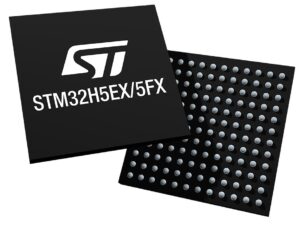
The STM32H5Ex and STM32H5Fx are the first STM32 to feature Chrom-ART2. The new 2D accelerator builds on the initial Chrom-ART to support more effects, more color formats, and new automations, thanks in part to a list of commands developers can use to optimize their operations. The new MCUs also feature a sizable increase in flash and RAM, with the latest devices offering 4 MB and 1.5 MB, respectively, more than double what the previous STM32H5 devices offered. Consequently, engineers can now…
T
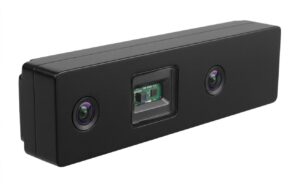
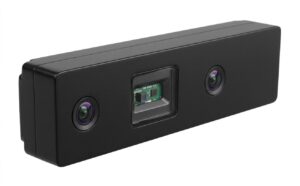
A module from Leopard Imaging that comes with our VB1943 5 Megapixel CMOS image sensor was used in a paper published in 2026 demonstrating that the device’s higher resolution and processing capabilities enable faster, vastly more accurate stereo vision sensing in robotics. In a nutshell, the added information allowed researchers to develop new methods for generating depth maps and other real-time data they could use to build a more impressive robot. New CMOS sensors are, therefore, not simply…
T
AUTOIQ.ai is a sensor calibration and image quality optimization tool from Emmetra, a member of the ST Partner Program that takes advantage of the STM32 hardware Image Signal Processor (ISP) to offer an interface that helps streamline workflow by walking users through tuning steps more organically, showing the impact of settings in real time, and even using AI to automatically tune parameters. Emmetra showed how AUTOIQ.ai could improve the quality of an image sensor on an STM32N6 and an…
T
ST is one of a select few Aliro solutions providers to offer publicly available hardware and software that enable the creation of systems capable of using NFC, Bluetooth LE, and Ultra Wideband (UWB). As markets try to meet new customer expectations for ease of use, interoperability, security, privacy, and reliability, smart locks and access control applications are adopting a new standard with a big promise: people can leave their physical keys behind without losing their minds out of fear of…
T
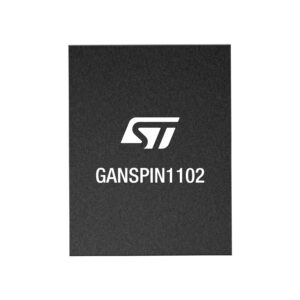
ST is showcasing the GANSPIN1102 and GANSPIN1105 at electronica 2026. They are our first GaN motor drivers with a 100 V input rating, meaning they can support 48 V and 60 V batteries in very tight spaces thanks to a package measuring only 6.5 mm x 5 mm and an RDS(ON) of only 2.4 mΩ. Both devices adopt a traditional half-bridge topology with two GaN power transistors and, as the part numbers imply, we target motor control applications like robotic joints, thanks to their small footprint and…
T
The recently released Zephyr 4.5.0 brings a slew of updates to the STM32 ecosystem including support for the STM32WL3, which was the last unsupported series in the STM32 family. With it comes support for the NUCLEO-WL33CC1 and wired peripheral support. It’s a testament to the collaboration between ST and the Zephyr community. Over the years, we have mainlined drivers, optimized performance and supported new features. And while we do have partners who use Zephyr and benefit from these…
T
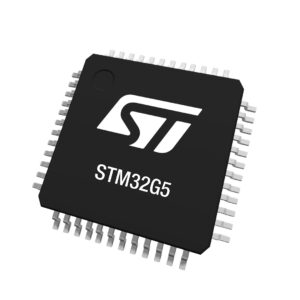
The new STM32G5 is ST’s most secure mixed-signal microcontroller thanks, in part, to its Cortex-M33 core offering TrustZone and its support for post-quantum cryptography. This is on top of the typical security features that developers now expect on an STM32 MCU and which enable us to consistently target SESIP Level 3 and PSA Level 3 certifications. Concretely, that means engineers can meet the latest regulatory requirements without a performance penalty or additional devices. It also gives them…
T
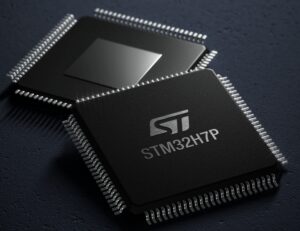
The STM32H7P is our first STM32 MCU to come with a hardware signal processor and a Neural-ART NPU, thus ensuring significant performance gains in intelligence and real-time control applications. It’s also our fastest STM32H7 with at least 1 MB of flash, since it runs at 520 MHz. It features up to 320 KB of Tightly-Coupled RAM, 192 KB of which is for instructions, ensuring deterministic execution of real-time code. Additionally, new timers open the door to digital power applications, while LQFP…
T
ST is launching the STM32G5, a new series of mixed-signal microcontrollers that features an unprecedented level of analog and digital peripherals, including a 12-channel timer with a high resolution of 111 picoseconds, a new position encoder, an integrated Programmable Logic Array with 16 logic elements, and an analog-to-digital converter supporting 5 Megasamples per second, up from 4 Megasamples previously, among other things. The STM32G5 is a new solution for engineers working on high-power…
T
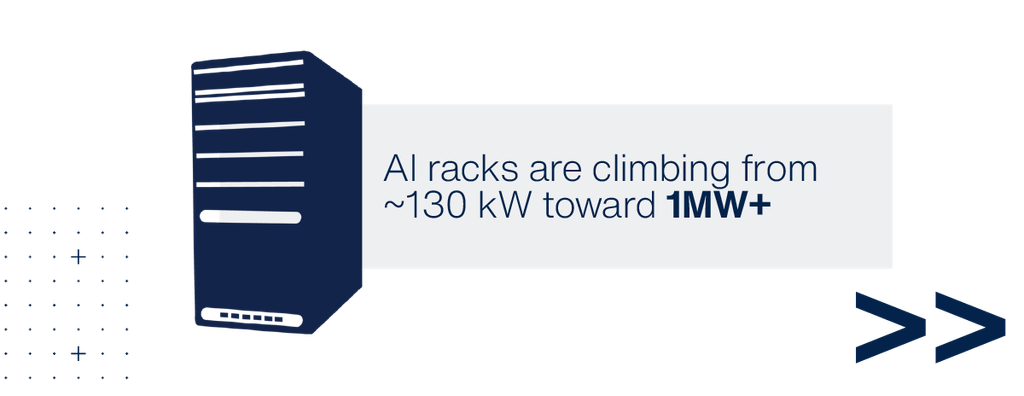
Powering a server used to be a solved problem. For decades, a typical server rack drew 10 to 15 kilowatts from a 48 volt distribution bus, and most racks outside AI still do. The control electronics behind them were mature and unremarkable. Artificial intelligence has ended that. Today’s AI racks already draw around 130 kW, the next generation is designed for a megawatt, and the change comes not for one reason but for several that arrive together. Compute density keeps climbing. Distribution…
T
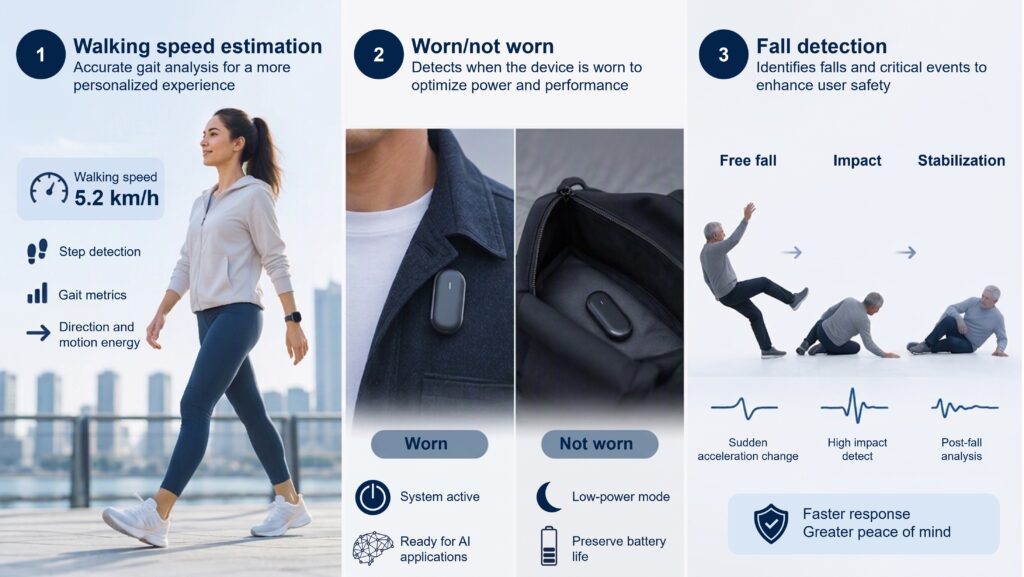
ST is showcasing its first AI algorithms utilizing the embedded NPU of the Snapdragon Wear Elite, a premium Intelligent Wearable platform for smartwatches, pins, and other personal AI form factors. The Snapdragon Wear Elite development platform uses our LSM6DSV32X, a six-axis inertial sensor with a machine learning core and finite state machines to run AI applications at a fraction of the power consumption a similar algorithm would need on an MCU. To showcase what this sensor can do on the…
T
Update: October 26, 2024 ST recently published STSW-SDATALOG-R, a serial datalogger for ST AIoT Craft that harnesses our Rust MEMS drivers to stream information over a serial connection. It’s a concrete example of the fruits that our Rust initiative now makes possible. Because ST started with drivers, we can now publish tools written in Rust to improve memory safety and build a growing ecosystem of modern applications. Developers can get started by grabbing a SensorTile.box PRO or an…
T
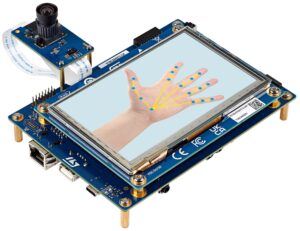
TouchGFX 4.27 continues to expand how developers optimize their graphical user interfaces with another framebuffer strategy: hybrid double buffering. By using internal and external RAM, applications enjoy the fast read-write access and low latency of the former and the larger capacity of the latter. Concretely, that translates into the ability to use a double framebuffer while shortening render times by up to 40%. This new version also introduces delta-compressed animations to reduce flash…
T
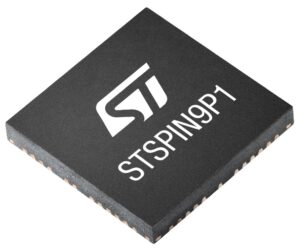
The new STSPIN9P series is our first 75 V high-current motor driver in a QFN 7 mm x 7 mm or 9 mm x 7 mm package, enabling factory or industrial automation, home and building controls, as well as other systems that would have required cruder designs because of space constraints. The low RDS(on) MOSFET, the ability to choose between multiple input modes, and the pulse-width modulating capabilities mean that designers save on their bill of materials. It also makes the STSPIN9P one of the most…
T
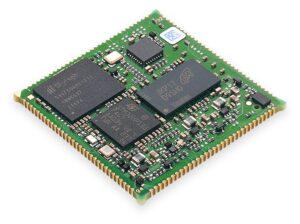
What can a System-on-Module do for engineers? We sat down with PHYTEC, an ST Authorized Partner, to understand this question through the lens of its STM32MPx SoMs. It is one of the first questions engineers ask, and the answer often shapes a project in significant ways. Since a system-on-module includes memory, the power supply, and the processor, among other things, using one strongly influences the hardware specifications of the final release. Moreover, a SoM also comes with a software…
T
Join the STM32 Summit on November 3, 2026, to learn more about what physical AI means for innovators today and for the embedded systems of tomorrow, enabling automotive, industrial, and robotic applications. Learn how STM32 will enable physical AI systems that sense, decide, and act in the real world. Discover the new strategic direction for STM32 that will shape designs for the next 10 years. We will have ST innovation leaders and experts share their knowledge so teams can get started right…
T
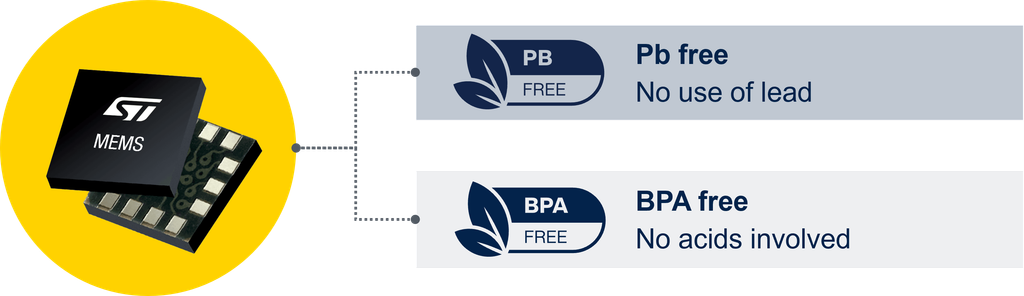
Motion sensing sits inside everything from wearables and wireless earbuds to drones, smart home appliances and industrial equipment. As these products become more widespread and longer-lasting, design teams must consider not only performance, power and reliability but also the materials inside each component. For STMicroelectronics, this is part of a broader responsible design approach, with sustainability considerations integrated from the start and not only in response to changing…
T
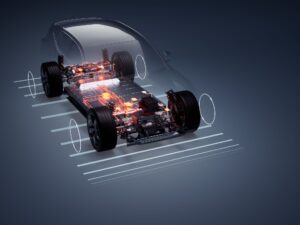
Automotive safety has grown up in layers. Passive safety, things like seatbelts and airbags, reduces harm once a crash is already happening. Active safety, such as anti-lock braking and electronic stability control, steps in while you drive to help prevent the crash in the first place. The newest layer, predictive safety, uses driver assistance and automated driving to remove the mistake before it occurs. Electrification adds one more dimension, because the battery itself now needs…
T
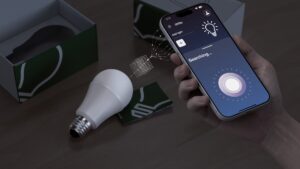
Update, September 15, 2026 ST just released ST MatterConnect, which helps reduce the time-to-market by streamlining the installation of the Device Attestation Certificate in final products. Put simply, ST became a Product Attestation Authority and a Product Attestation Intermediate for Matter credentials, so customers can get customized certificates and pre-load them onto their Matter devices alongside their keys in a secure, efficient process. ST has a Public Key Infrastructure (PKI) that…
T
Update, November 16, 2027 We have updated this blog post after the release of the AEK-MCU-C4MLIT2 MCU board and revised it to better outline how the supported communication protocols can help engineers conceive more complex systems. Original publication, September 9, 2026 Smart power distribution in cars is a unique challenge because it is one of those extremely rare design predicaments that affects all types of vehicles at once. Whether it is [one of the most cutting-edge supercars in the…
T
Ask four research houses where humanoid robots are headed and you will get four different answers. ABI Research expects a $6.5 billion market by 2030. Goldman Sachs Research projects $38 billion by 2035. Morgan Stanley models a humanoid economy approaching $5 trillion by 2050. And Gartner predicts that fewer than 20 companies will have humanoid robots in production by 2028. The forecasts differ because they measure different things over different horizons. The direction, however, is not in…
T
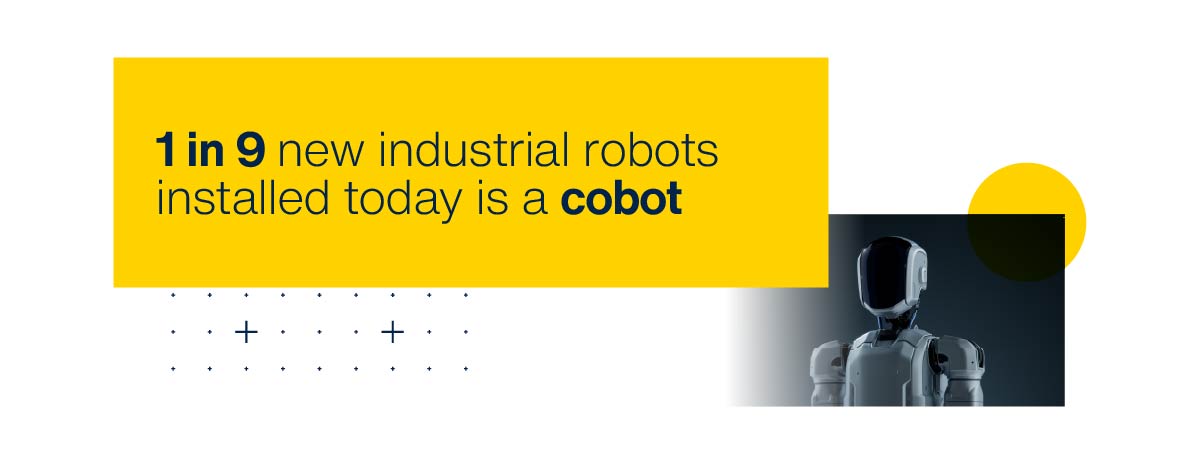
Factories installed 542,000 industrial robots worldwide in 2024, according to the International Federation of Robotics. The more telling number sits inside that one: 64,542 of those machines were collaborative robots, designed to work next to people rather than behind fences. Cobots now account for roughly one in nine new industrial robots, and Interact Analysis expects shipments to nearly double to around 129,000 units a year by 2030. For decades, the rule of industrial robotics was…