A
Arduino Nano XL Link is an evolution of the popular Arduino Nano board, with the same dimensions, but featuring a more powerful Microchip PIC32CK Arm Cortex-M33 running at 120 MHz with 2 MB of flash and 512 kB of RAM. It also adds CAN FD, RS485, and 10/100 Mbps Ethernet field bus transceivers for industrial, home, and building automation applications such as industrial networks, motor drives, building automation buses, smart sensors, and touch panels. The company also unveiled the Nano XL Link…
A
Renesas RZ/T2N industrial MPU supports up to four-axis motor control and includes PWM timers, encoder interfaces, and trigonometric accelerators. It’s designed for industrial robots, programmable logic controllers (PLCs), motion controllers, and multi-axis servo drives. The MPU features up to two 1.2 GHz Arm Cortex-A55 cores for application processing and two 800 MHz Cortex-R52 cores for real-time control. It also integrates a three-port Gigabit Ethernet switch with TSN support and industrial…
A
AAElectronics’ LocalDot is an open-source replacement mainboard that converts a 3rd-generation Amazon Echo Dot into a local voice assistant compatible with Home Assistant. The board replaces one of the two original PCBs while reusing the existing microphones, speaker, buttons, LEDs, and enclosure, so the device works without relying on Amazon’s cloud services. The board combines an ESP32-S3 for WiFi connectivity and device control with an ESP32-P4 for audio processing. It supports the original…
A
Andrii Shylenko’s LabWired is an MIT-licensed MCU firmware simulation core that runs compiled firmware against modeled CPUs and peripherals, captures UART and bus output, register state, and supports repeatable checks in CI. The simulator works on Arm Cortex-M0+, Cortex-M3, Cortex-M4, Cortex-M7, Cortex-M33 cores, RISC-V architecutre, and Xtensa LX6 and LX7 (some ESP32 parts). The main benefit of the project is speeding up firmware testing since doing some on real boards is slow. The hardware…
A
waiting on new kernel build before spouting off
A
It’s now possible to run KiCad 10 directly in a web browser or as an Android app thanks to two separate open-source projects, unaffiliated with the official KiCad project. Let’s have a look at both. Ziro Designer/ZiroEDA – KiCad 10 in your web browser Akshay Rukade (ZiroEDA), an engineering student in India, ported KiCad 10.0.6 to the browser through the Ziro Designer/ZiroEDA Designer project. It’s a TypeScript translation of KiCad’s C++, kept file-for-file against the KiCad implementation, so…
A
The STM32G5 series is a family of 280 MHz Arm Cortex-M33 mixed-signal MCUs designed for industrial power supplies, photovoltaic inverters, EV chargers, robotics, and motor control systems. It doubles the performance of the older STM32G4 series unveiled in 2021. The new MCU family features up to 512KB flash, 112KB SRAM with ECC, a 111 ps high-resolution timer (HRTIM) with up to 12 PWM outputs on some variants, and 12-bit ADCs supporting up to 5 MSPS. Other features include position encoder…
A
This cycle is defined by the launch of the armbian/external packaging pipeline, broad kernel and U-Boot version bumps across platforms, and substantial desktop and repository infrastructure work. The new armbian/external repository establishes a dedicated build and mirror pipeline for third-party software, with tooling for dependency checks, parallel sync, incremental uploads, and a package site published at external.armbian.com. Initial payloads include charsiu for the RK3576 NPU, developer…
A
Seeed Studio XIAO STM32C5 is the company’s first XIAO development board based on an STMicroelectronics MCU, namely a 144 MHz STM32C5A3CG Arm Cortex-M33 microcontroller. It features two CAN FD controllers and a 6-axis IMU with programmable heating for robotics, industrial control, and motion-sensing applications. The board also includes 16MB of external flash, a 48 MHz external crystal, a USB-C port, and battery charging circuitry. One CAN FD channel is connected to an onboard transceiver, while…
A
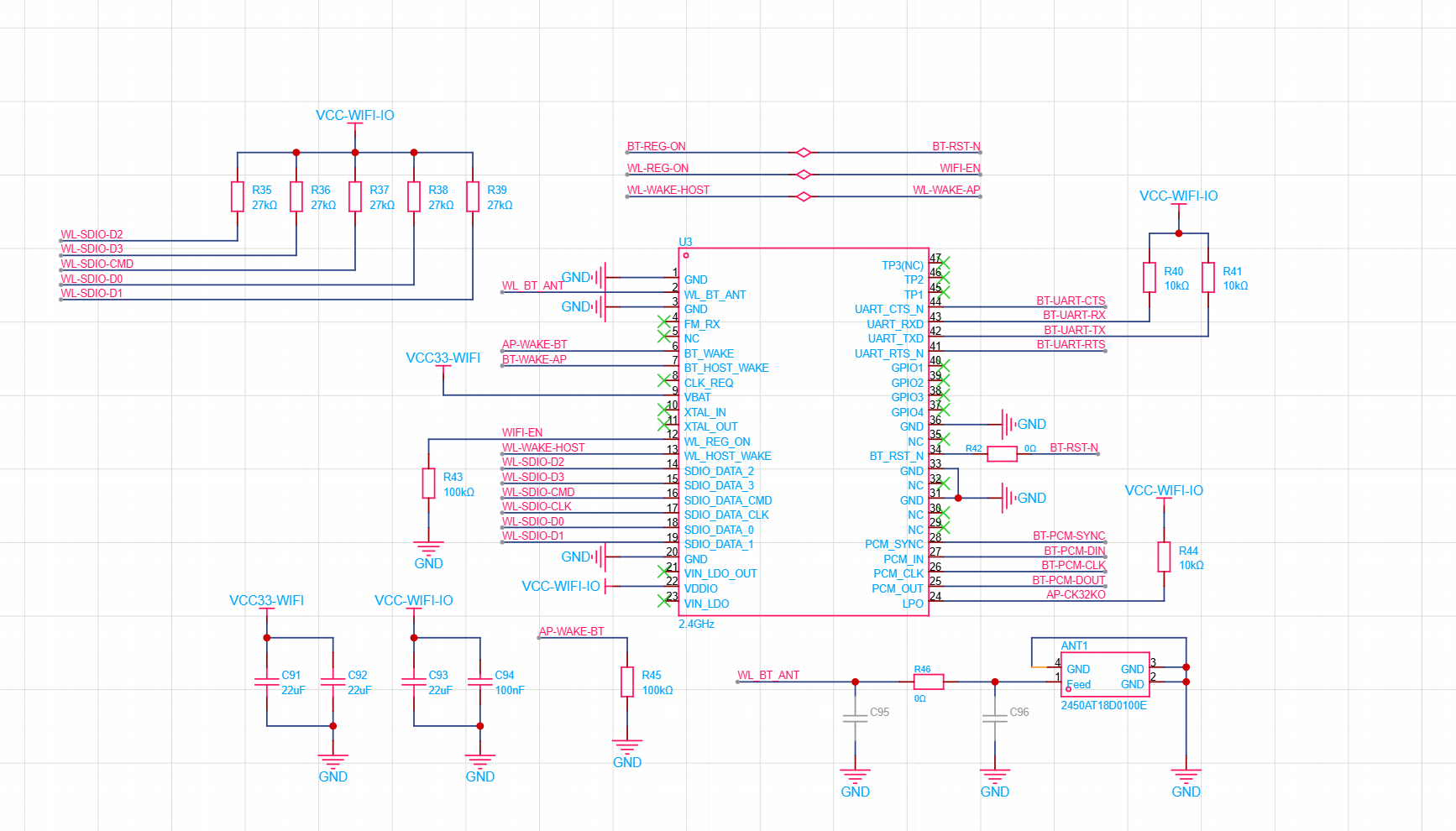
Hi all, I’ve designed and built a custom H616 board using the Orange Pi Zero 2W schematic as a reference, but with an AP6212 for Wi-Fi/BT. The board boots the Orange Pi Zero 2W image to a login prompt, with DRAM, HDMI and UART working, but the AP6212 never appears on SDIO. The AP6212 section of the schematic is attached. Setup SoC: Allwinner H616 Wi-Fi/BT: AP6212 on SDC1 (4021000.mmc) WL_REG_ON: PG18 OS: Orange Pi OS (Arch), Zero 2W image with a custom DTB brcmfmac, the Broadcom firmware and…
A
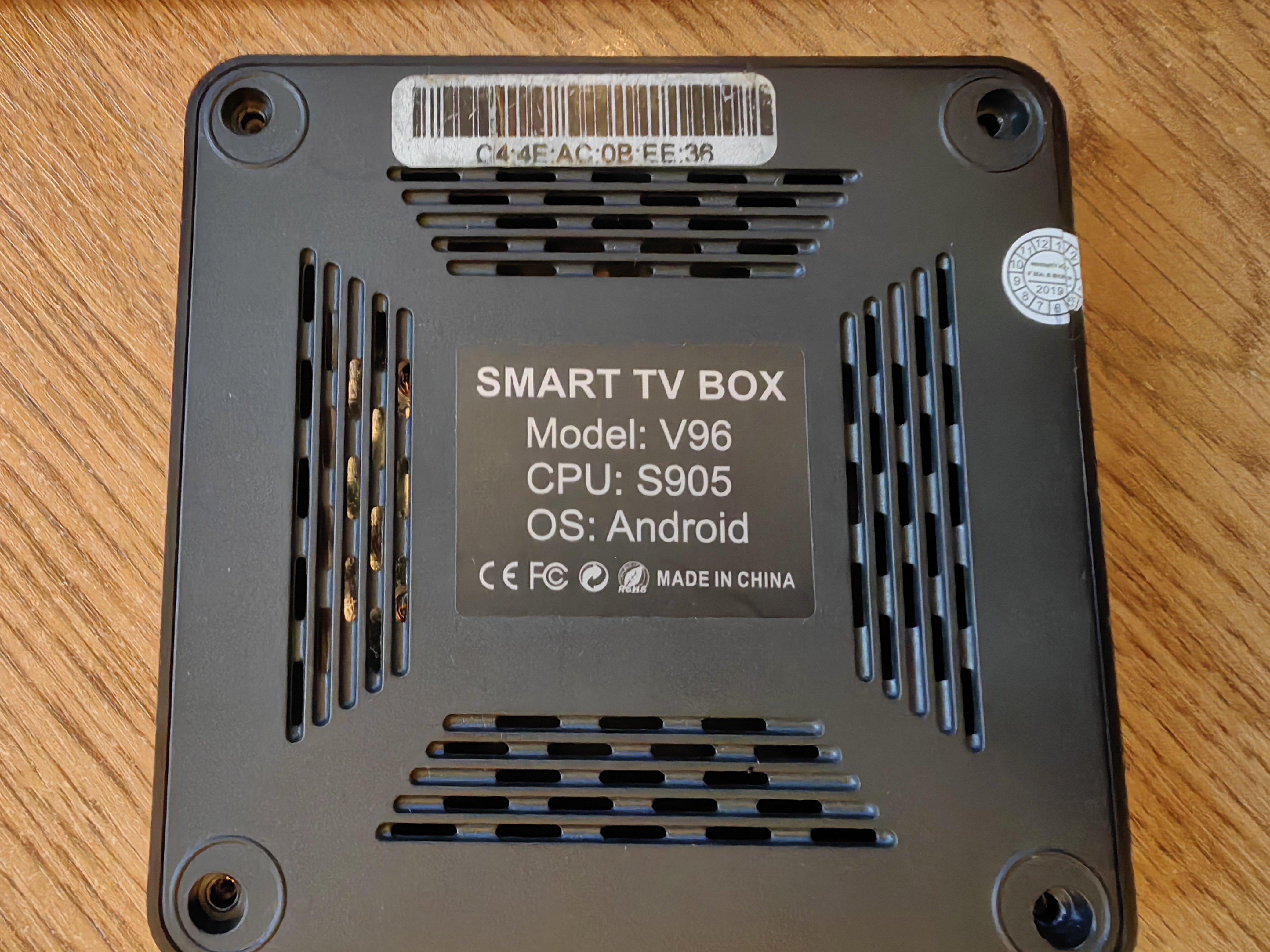
I’m trying to install Armbian, but I haven’t been able to select the right image. The device refuses to boot from the flash drive and instead loads into TWRP. I prepared the bootable drive using Rufus with this image: Armbian_26.11.0_amlogic_s905x-t95_bookworm_6.12.114_server_2026.11.02.img.gz. I tried other images as well, but that didn’t help. I also set up EmuELEC, and everything works perfectly with that.
A
SparkFun introduced two new development boards called IoT RedBoard, both based on the ESP32-P4 v3.x (ESP32-P4X) and compatible with the Arduino UNO R3 form factor. The main difference is that one features an ESP32-C5 for Wi-Fi 6, Bluetooth 5 LE, Zigbee, and Thread connectivity, while the PoE version includes 10/100 Mbps Ethernet and Power over Ethernet (PoE) support. They also include MIPI CSI/DSI camera and display connectors, two USB-C ports, a microSD card slot, Qwiic expansion, Arduino…
A
M5Stack’s Core Matrix is an ESP32-C61-based IoT controller with a 16×16 white LED matrix for displaying icons, animations, device status, and notifications. It supports 2.4 GHz WiFi 6 connectivity and is designed for IoT applications, sensor data monitoring, and interactive displays. It also includes a 6-axis BMI270 IMU, a microSD card slot, a passive buzzer, three user buttons, a power button, and a USB-C port. The board supports external modules and sensors through M5-Bus and Grove…
A
Back in May, we wrote about the Procolored X One 3-in-1 laser engraver with UV and UV-DTF color printing, and the company contacted us a few months later for a review. But instead of having us review the laser engraver, they proposed that we test their K13 Lite DTF printer “developed for small businesses and creators producing customized apparel and merchandise”. Basically, a T-shirt printer using DTF (Direct-to-Film) technology. I wasn’t so sure at first, since T-shirt and garment printing…
A
@igorpaunovic The HDMI finding, in full. What the series does. Cristian Ciocaltea's 15 patches teach the RK3588's HDMI 2.1 block (the Synopsys DW HDMI QP) to output YUV422 at 10 bits and YUV420 at 8 or 10 bits, instead of RGB only. That matters for 4K at 120 Hz over HDMI 2.0-class links and for HDR sinks that want YUV. Patches 1 to 10 are VOP2 fixes and clock plumbing, 13 and 14 add the formats, 15 is the device tree. Heiko took all of it into drm-misc-next on 2026-11-06, so it is headed for…
A
Waveshare ESP32-S31-Zero is a small ESP32-S31 development board that follows the form factor of the earlier Waveshare “Zero” boards, such as the ESP32-C6-Zero-B, RA4M1-Zero, and ESP32-S3-Zero, among others. The new tiny board still features a USB-C port for power and programming, as well as eighteen through and castellated holes for GPIO and power signals, but it boasts a more powerful ESP32-S31 dual-core RISC-V MCU clocked at up to 320 MHz, featuring 2.4 GHz WiFi 6, Bluetooth 5.3, and 802.15.4…
A
Just got an ODroid M1S (8GB), tried current community build, and found it wasn't working (Armbian_community_26.11.0-trunk.120_Odroidm1s_resolute_current_6.18.60_minimal.img.xz). So, a thread while I'm debugging if anyone's interested. Lets see how far I get. boot_fail.txt
A
Board: HINLINK H68K (community-maintained) Image: Armbian_community_26.11.0-trunk.108_Hinlink-h68k_trixie_current_6.18.57_minimal (kernel 6.18.57-current-rockchip64) What happened? 1. The port labelled eth0 never works. At boot its link LED blinks once and stays dark. mii-tool end1 reports "No MII transceiver present!" and bringing it up logs "Failed to reset the dma". I observed the problem on two separate H68K units. Once that was resolved, I further noticed that... 2. With a good cable, eth0…
A
The 26.8.3 BPI-F3 image ships linux-image-current-spacemit 26.8.3 with kernel 6.18.45, but apt.armbian.com serves 6.18.44 under the same version: ``` $ apt-cache show linux-image-current-spacemit=26.8.3 | grep Filename Filename: pool/main/l/linux-6.18.44/linux-image-current-spacemit_26.8.3_riscv64__6.18.44-....deb $ apt list --upgradable | grep linux-image linux-image-current-spacemit/trixie 26.8.3 riscv64 [upgradable from: 26.8.3] ``` apt upgrade then installs 6.18.44, while /boot/dtb still…
A
The 26.8.x BPI-F3 images boot via extlinux, and the vendor U-Boot has CONFIG_SYS_CBSIZE=256. pxe_utils.c rejects a longer append line (bootarg overflow, serial only), so a headless board just never boots. The default line is already 223 chars: adding systemd.log_target=kmsg printk.devkmsg=on (265) was enough to trigger the issue. Suggestions: raise CONFIG_SYS_CBSIZE in the board's U-Boot config, and/or drop splash plymouth.ignore-serial-consoles from minimal images (Plymouth is not installed).…
A
STMicroelectronics has introduced the STM32H7P4 and STM32H7P5, two 520 MHz Arm Cortex-M7 MCUs part of STM32H7P family designed for digital power, motor control, industrial sensing, and edge AI applications. Both feature a Hardware Signal Processor (HSP) for accelerating mathematical and signal-processing operations, while the STM32H7P5 also includes an 85 GOPS Neural-ART NPU for Edge AI inference/TinyML. The MCUs feature up to 2MB dual-bank flash, 736KB SRAM, two high-resolution timers with up…
A
We’ve been sent a GEEKOM A5 2027 Edition mini PC powered by an AMD Ryzen 7 7730U 8-core/16-thread CPU for review. The mini PC supports up to 64GB dual-channel DDR5-5600MHz memory, can drive up to four independent displays via HDMI 2.0 and USB-C ports, includes three USB 3.2 Gen 2 Type-A ports, two USB 3.2 Gen 2 Type-C ports, one USB 2.0 port, a full-size SD card reader, a 2.5GbE port, and Wi-Fi 6 and Bluetooth 5.4 wireless connectivity. The model sent for review ships with 16GB DDR4 SO-DIMM RAM…
A
AAEON claims the PICO-PTH4 is the world’s first 2.5-inch Pico-ITX board powered by an Intel Panther Lake processor, such as the Core Ultra 5 325, Core Ultra 7 355, and Core Ultra X7 358H, delivering up to 180 TOPS of AI performance in a 100mm x 72mm form factor. The single board computer ships with up to 32GB of LPDDR5X, supports M.2 M-Key/E-Key and PCIe x4 FPC expansion, and offers dual 2.5GbE, HDMI 2.1 video output, two USB 3.2 Gen 2 ports, and internal connectors for USB 2.0, front panel,…
A
Hi everyone, I have physical access to an Orange Pi 5 Ultra with 16 GB RAM and would like to help with testing and maintenance of this board. Here is my first round of hardware testing on the current/mainline image. I am posting the working features, reproducible problems and remaining gaps separately. This is an initial test report, not a release sign-off. Image and test environmentBoard: Orange Pi 5 Ultra, RK3588, 16 GB RAM. Image: Armbian community 26.11.0-trunk.120, Ubuntu 26.04 Resolute,…
A
Olimex UEXT-CH390 is a small open-source hardware module that adds 10/100 Mbps wired Ethernet connectivity to microcontroller boards through an SPI interface. It is designed for Raspberry Pi Pico and Pico 2 boards, as well as ESP32-S3, C3, C5, C6, and other microcontrollers without built-in Ethernet connectivity. The module is based on the WCH CH390 Ethernet controller and features an RJ45 connector, a standard UEXT connector, and a smaller 1.0mm-pitch pUEXT connector. It measures 50 x 21 mm…
A
Next week we'll be at electronica in Munich! In partnership with Renesas, Collabora will showcase real-time, low-latency ML video analytics on Renesas RZ/G2L and RZ/V2H platforms, using GStreamer for integrated video processing and on-device AI inference. View the full article
A
Board: Olimex A20-OLinuXino-LIME2, revision L (2018 silkscreen) Image: Armbian 26.11 rolling, Trixie minimal, kernel 6.18.60-current-sunxi Hardware: 1GB RAM, wired only Summary: Ethernet negotiates 1000 Mbps full duplex, but no frame the board transmits ever arrives. Receive works — RX counters climb into the hundreds of thousands on broadcast traffic — while TX packets increment with TX errors static at 6 and nothing lands. DHCP never completes, ARP for the gateway never resolves (the only…
A
NXP MCX W70 and KW43 wireless MCU families support Bluetooth 6.x Channel Sounding for secure distance measurement in industrial IoT and automotive applications. The MCX W70 supports Bluetooth LE, Zigbee, Thread, and Matter for Smart Home and industrial devices, while the KW43 is designed for automotive applications such as digital keys and secure vehicle access. Both families feature a 96 MHz Arm Cortex-M33 application core, a separate Cortex-M33 core for wireless connectivity, up to 1.5MB…
A
Gil Tal has developed the P4 Launcher, an open-source application platform designed to bring a PC-like experience to ESP32-P4 boards with an attached touchscreen display. The launcher boots directly into its interface, while applications (.papp files) are stored on a microSD card and loaded into PSRAM when launched. You can add, remove, and run applications without reflashing the firmware or rebooting the device by simply copying files to the microSD card.Gil says 21 PAPP (PSRAM APP)…