U
Robots, liberated smartphones, witchified smartwatches and joyful experimentation. Letting Erlang and the BEAM become the foundational layer for my technology. Personal open source still gives me hope. I start more things than I finish. This is no different. But I do finish some things. Notably I made a conference. That conference kicked some people into very high gear and drove them to finish some very ambitious projects. And we see a lot of waves from that in the Nerves community currently.…
U
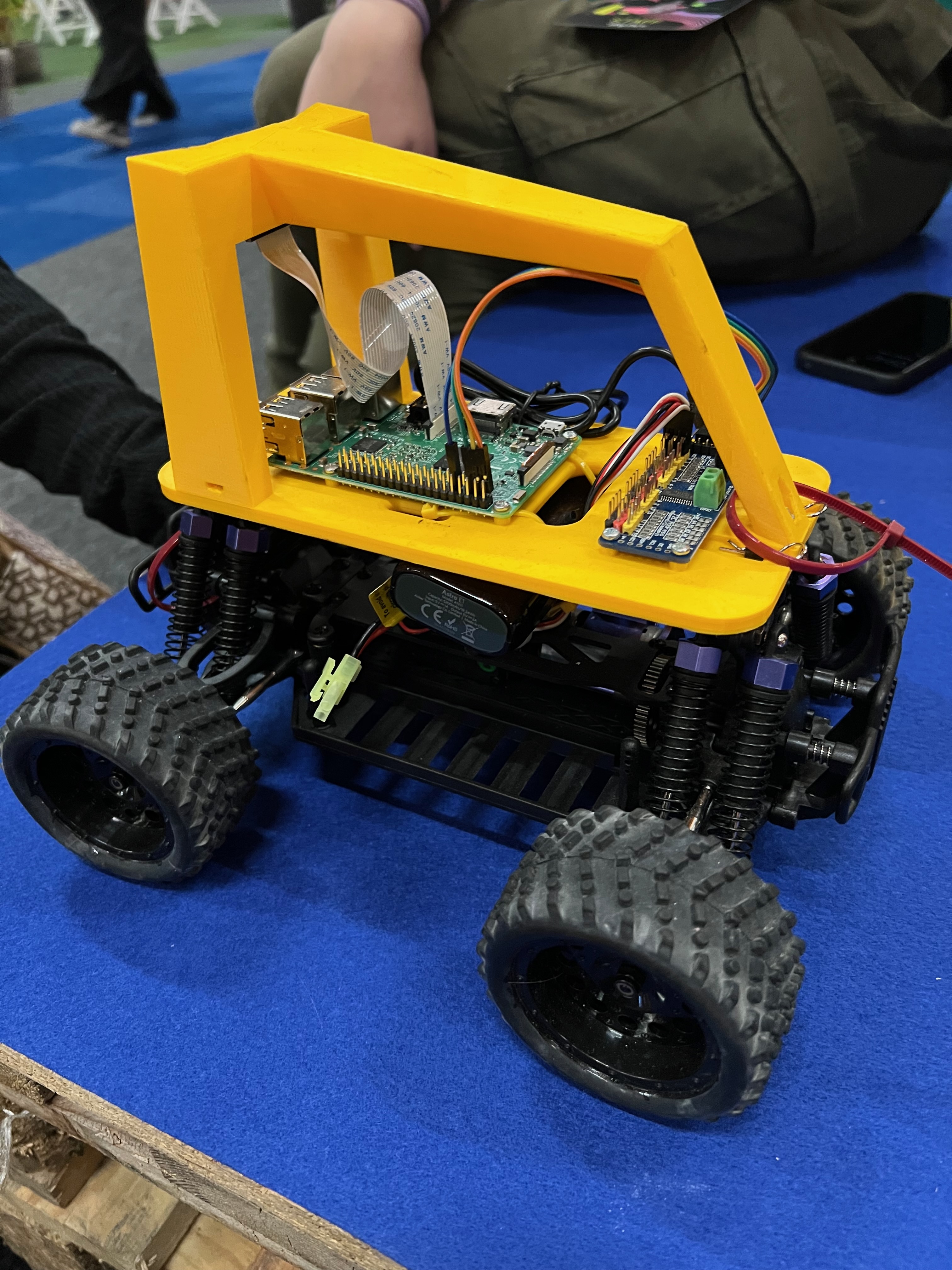
When I spoke at Oredev this year I nearly stumbled across these fucking things. Some kind of RC-car looking robot vision thing. With Raspberry Pis on them. In the booth next to where I found it Neo4j was doing .. something .. with a PuppyPi robot dog thing. So I thought it was theirs. Or some other exhibitor. But no. Asking the organizers it turns out these were just fun pieces of kit they had around from a past event. No-one quite knew how they worked on the current staff and there hadn’t been…
U
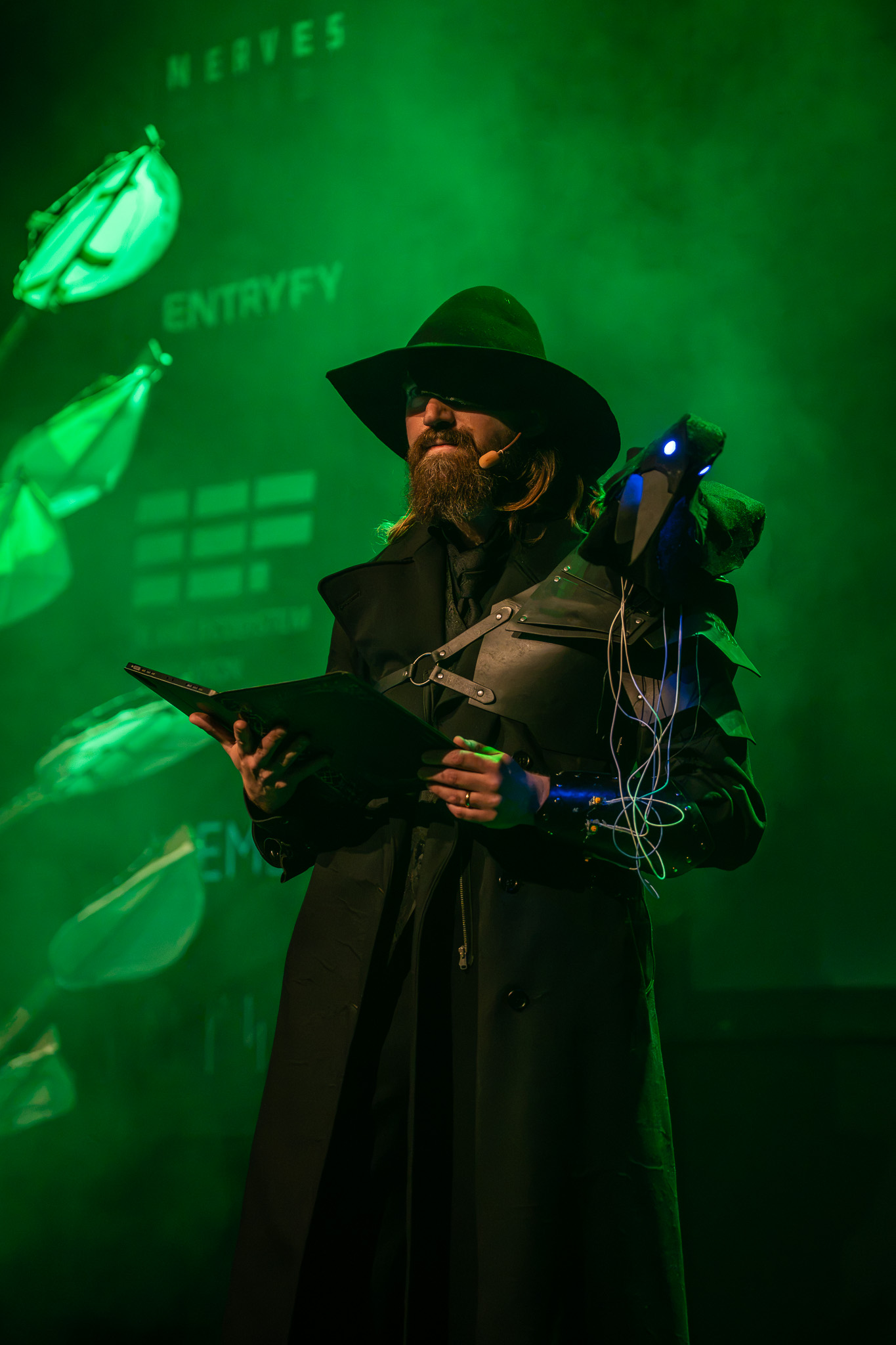
The halls of the conference are empty. A few developers are working on their laptops, clearly cramming in some work they are on the hook for. Everyone else is attending the talk. The hallway track is quiet. The horns sound out in the theater. Resonant in a space that predates amplifiers. The drum strikes deeply. I enter the stage in the mist of the smoke machine and green light. I can’t see the audience but I hear the murmuring. A nervous smile as I launch into a silly loveletter to our open…
U
I’ve been active in the Nerves community ever since 2019 when I made it control a small eInk display. It was and is a welcoming group of Elixir nerds and BEAM huggers that do fun stuff with hardware. This is also why I insist on gathering them at Goatmire Elixir. Some do it professionally, some for fun. What makes it nice for developers also seems to make it nice for agents. Or for edge AI startups. Or something. We see sneaky growth. The trendline is all vibes unfortunately. I have no source…
U
Oredev is an awesome conference I really enjoy. This will be my fourth year. I have had the fortune of going as a speaker and every year I sift through the probably very nice Java and .Net talks for stuff that suits me. And there are always some real gems. Total transparency, I am a media partner for the conference, which lets me make videos like this one where I bother their sponsors about whether they use Elixir. I promise it hurt more for me than it hurts to watch and I think it actually…
U
I mostly program in Elixir. So tracing is an overloaded term. This post relates to both of them and how we can use BEAM and Erlang fundamentals to do wild things for observability that wouldn’t be practical in most runtimes. Let’s load some hot code. First is a set of (experimental) updates I’ve done to my “Erlang tracing” library Entrace. Erlang’s concept of tracing is a mechanism in which you can tell the system to send you information about execution of functions that match some pattern. The…
U
I’m going to be speaking at ElixirConf EU in Malaga. When I got to Elixir conferences I relatively often also make sure to run a little something-something for the real heads. A Nerves thing. Touch keyboard, touch hardware, get to know people. The biggest reason for this is to make an ice-breaker for people that are attending the conf. People who would enjoy a way to engage with others up front in a practical workshop kind of way. We’ve done shared hacking on PRs and issues. We’ve done more or…
U
In September of 2025 Tigris sponsored an odd effort at an unusual conference. They contributed the money for manufacturing hardware devices to be used and hacked on during Goatmire Elixir in Varberg, Sweden. These devices also used Tigris for some features. Everything about it is open source. Let’s see what it turned into. Goatmire Elixir is my (Lars') brainchild. I like the idea of a quirky event, smaller scope and people who are deeply enthusiastic about related things. So I made one, for the…
U
Goatmire Elixir 2025 was a very dense success. The second one just got announced. I say dense. Because massive success would make it sound large. And it wasn’t a large event. 150 attendees, with speakers and volunteers we were around 200 in total. And it went incredibly well. The feedback, the surveys, the outpouring of love and appreciation were all way above what I dared hope for. People have been graciously giving me space to consider a second one but it has also been the single most…
U
The quiet was unsettling. The lack of concrete things to do was stressful. Me and my wife had been fretting and flitting around the house for most of the day making sure everything was staged, that we had the various prints, checklists were ready, lots of bags and boxes were packed. The event wasn’t even starting today, not even fully tomorrow. The quiet after intense preparation. Snap to today. The event has now happened. Results are in. I am very satisfied. This is my conference report, as…
U
In the previous post on 500 virtual linux devices on ARM64 I hinted that I expected serious improvements if we got KVM working. Well. We’re there. Let’s see what we got going on. Disclosure: I am running a conference called Goatmire Elixir which Ampere is a sponsor of. This post is not part of the sponsorship exchange as such. It is prep for my talk for the conference which uses the hardware they lent me. So this is your transparency notice, but fundamentally I am not making comparisons on…
U
This is the first part of an experimental journey as I explore how many instances of my favorite IoT framework I can run on the 192 core Ampere One. Background I work on the Nerves project which is an IoT framework providing best-practice underpinnings and support so that you can build your IoT hubs, smart thermostats and the like with a safe and productive high-level language on a runtime known for reliability, resilience and consistent performance. The language being Elixir and the runtime…
U
Binary deltas of firmware via fwup has been a supported feature for a while. There has also been a kind of rudimentary support for it in NervesHub. We can now remove the word rudimentary. There is now proper delta support in NervesHub. It is not in a tagged release quite yet but NervesCloud runs off of main and so can you if you would benefit from this. (I initially wrote this up for the Nerves Newsletter but wanted it shareable in some other way) One thing that prompted finalizing this work…
U
It all started when I visited Gig City Elixir. Or maybe it started when I did a workshop in preparation for a Code BEAM in Stockholm. But that actually started from reading Priya Parker’s book The Art of Gathering. Maybe this has been coming for a while. I’m making an Elixir conference and it happens 10-12th of September in Varberg, Sweden. Tickets are still available at the time of writing. I figured it might be interesting to hear one data point of pulling something like this together. I may…
U
We all have varying degrees of exposure to Big Tech. Some of it seems fine, stable and can be relied on. Some of it feels like shifting sand under your feet. React seems to move a lot on whims, I don’t envy tracking that. Go seems like it might be fairly stable? With the current geo-political climate I don’t find massive corporations to be a guarantee for stability. People may be getting fired even though they chose IBM. The world is wild right now. There are programming languages that came up…
U
I wanted there to be an Elixir shirt you could buy. I talked to some people. Made some calculations. Took some debatable photos. And now you can pre-order The Elixir Shirt. The Officialness This is an officially approved use of the Elixir logo trademark, by explicit permission from the Elixir core team. Usually the trademark can’t be used commercially. I was granted permission to make and sell products with the brand. We will make a small margin which if we’re lucky compensates my wife for the…
U
Me and the team had a meeting which we dedicated to talking about architecture. Sort of an ad-hoc exploration of patterns and concepts. How systems usually fit together. Which is mostly through various types of queues. And a bunch of common patterns like request/response, publish/subscribe and workers on a queue. And most request/response is essentially workers on a queue going in two directions. This post was originally written as part of my newsletter which is a weekly thing that I’ve done…
U
I hacked on something quite useful in the last few weeks, off and on. Voice Activity Detection in Elixir with Silero VAD through ONNX. I’ll show what I did and try to give an idea of what it is and why it is useful. It boiled down to this gist as a proof of concept. Should work on most Elixir installs. These days Membrane will even try to pull pre-compiled dependencies for the libraries it wants. This was pleasant news as it can otherwise be a hassle to pull the right shared libraries for media…
U
What feels like forever ago but what was probably a year and a half I gave a talk about Lively LiveView with Membrane. Video is available for the curious. It was a stunt talk but also a talk about creativity and how Elixir let’s me plug things together and try things that feel magical. That feeling has never left me. Some of the magic is a goddamn pain. Take the Membrane framework. I really like what it enables me to do but it is also a bit messy. Setting up pipelines is not trivial, writing…
U
One of the Erlang ecosystem’s spiciest nerd snipes are hot code updates. Because it can do it. In ways that almost no other runtime can. I use Elixir which builds on Erlang and has the same capabilities. The standard way of doing Elixir releases via mix release does not support Erlang hot code updates. As in, it will not generate the necessary files for you. And if you do want to do it there are several blog posts you need to stitch together or you need to use the Erlang docs in great detail.…
U
Working on the Nerves project, the Embedded framework for Elixir, has given me an increased appreciation for how Frank Hunleth and his collaborators through the years have structured things. And while I’ve found crossing into the Linux-heavy part of it difficult and frustrating there has been reasonable steps to take all the way from building the application layer in Elixir all the way back to fighting the bootloader. I’ll try to detail how a Nerves system is built up in this post. The Erlang…
U
The Nerves project is a way of building embedded Linux devices where the BEAM virtual machine takes care of running things. This does not constrain what you can run in any significant way. The easiest way to think of it is as a replacement for systemd. Though it is not only that. I will attempt to explain the different ways you can run things via the BEAM and consequently, on Nerves. 1. BEAM code (Elixir, Erlang & friends) If you write your darned application the it was intended. In a Elixir,…
U
I adore Nerves. I recently joined the core team. And I’ll be doing my best to help people get along with this lovely way to co-mingle hardware and massively concurrent reliable software. Getting started Assuming you have a comfortable Elixir & Erlang installed, preferrably the most recent. Most conveniently through asdf/mise, but I don’t judge. Instructions are lifted from the official docs but I will try to keep it leaner as I assume you are comfortable with Elixir. Install deps for your OS:…
U
I’ve kept very busy recently and as I look at what I published last it has clearly kept me from blogging. I don’t love that. I like having a blog and I like tending to it. I’ve not missed a beat on the newsletter’s weekly cadence but that might not be your jam. Let’s catch up. I’ve been diving into embedded Linux with Elixir. My latest non-newsletter issue was about The Future Stack. I think that idea is interesting and holds some water though I’m still not convinced anyone will solve the…
U
My newsletter-provider Campaign Monitor (not a recommendation, they are .. fine I guess) are having an outage. And I’ve been on an unbroken publishing streak for the newsletter for a significant number of years. Probably 4, I could check but can’t log into Campaign Monitor. So this goes on the website until I can send it properly. Dangit. Building up the Nerve(s) As we are doing NervesCloud we are thinking a lot about adoption for Nerves. Our market is tightly bound to the number of folks doing…
U
Fly.io is a highly visible cloud provider in the Elixir ecosystem and they put forward an interesting promise. They don’t deliver on that promise currently but I think it would be very compelling if they get there. Especially for Elixir. Let’s dig in. This work is sponsored and supported by Tigris. Object Storage that works like a CDN on Fly. They are also part of the subject of the post. You’ll see. It is not mainly about them though they play an interesting part. This post is adapted from a…
U
I went to Chattanooga in Tennessee from Sweden to hang out with the Elixir community. I’ve been part of Elixir in various ways for 6-7 years now and this is the first time things have lined up and I could go to the US for a conference: I had a sponsor for the trip. I was offered to not just speak but keynote. The conference is put on by friends, Bruce and Maggie Tate, who’ve supported a lot of great stuff in the Elixir community for a long time. And Todd Resudek decided to do NervesConf in…
U
In this part of the series we dive into one of the frameworks and toolsets that really got me going with both Elixir as a hobby and the community as a space full of helpful people. This will be all about The Nerves Project, oh, and touch on some related stuff. Before we dig in I should shout out some other BEAM, Elixir & Erlang-related things in the embedded space. AtomVM seems super cool and lets you do Erlang and Elixir on microcontrollers. ESP32s and such. I haven’t tried it. I really…
U
I did a livestream where I talked about Object Storage. The how and the why. The Bad Old Days. And also the neat and interesting stuff just beyond the basics. I figured I’d cover that in text as well. You can watch the stream here. Transparency notice: The livestream and this blog post have been work supported by Tigris. We collaborate on the topics, they provide resources and pay for some of my time so I can do this stuff instead of writing software for clients. I am very glad and thankful…
U
TLDR: the tricky part is “Large”. “Language” and “Model” seems manageable. But largeness has all sorts of trouble associated with it for mobile devices. Not insurmountable, but challenging. Also makes for finicky development. To start off, I am not an AI expert. I am not an ML engineer. I’m a web and systems dev that mostly works in Elixir these days. Through the Elixir community I got connected with ElectricSQL and have done some collaboration with them. This post is done as part of my work…