Capitalising an Asset failed
This issue has been sorted by updating the system. Assets can be capitalised without any problem.
Posts from every feed QUEST has found across the web — blogs, news, podcasts, channels and more.
This issue has been sorted by updating the system. Assets can be capitalised without any problem.
@sohamkulkarni Thankyou for looking this up.
Yes. it is fixed by frappe. They updated it to latest version (but still on frappe framework version 15). But I cannot update it on my own since our helpdesk is on shared bench,.
Reviving this thread because I recently ran into this exact headache on our site. Cleaning out orphaned files and comment logs helped us free up space immediately, but we eventually just raised the max_attachments value in our configuration. Has anyone found a good script or automated way to purge these hidden database attachments regularly?
Jumping in on this older post to check if anyone is currently working on updating the Korean CSV files for newer versions. I noticed some awkward terms while setting up a local bench site recently and would love to help fix them. Is everyone still using the translation portal for submissions, or are you opening pull requests directly on GitHub?
I realize this is from a while ago, but I wanted to see how this turned out for you in the end. Did you manage to use standard modules with basic custom fields, or did you need a full custom app built? I am setting up something similar now and would love to hear which path worked best for your team.
Reviving this thread because I really wanted to check in on the mobile barcode scanner planned for packing slips. We run a small distribution warehouse and manual entries slow our team down daily. Did that feature make it into the latest release, or are there any short video clips showing how the batch generation from serial numbers works in real-time?
Jumping in on this older post to see how the internal supplier PO setup worked out long term for your reporting. Setting up dummy POs can work nicely, but did you run into any issues with inventory valuation or supplier ledgers getting cluttered? I usually tag budget lines directly with custom fields instead, so I am curious if your external tool still pulls those commitment lines cleanly without extra workarounds.
Reviving this thread because I ran into this exact wall with container setups on WSL. Switching to custom images worked, but creating a clean dev environment with Frappe Manager made daily tweaks way faster for me without rebuilding every time. Did you end up going down the custom image route, or did you try out another dev tool to bypass the asset build issues?
Reviving this thread because I want to see how everyone has been getting along with this setup recently. Has anyone here tested it heavily on Windows with WSL2 for their daily workflow? I am curious if the integrated database viewer and logs hold up well over long sessions, or if sticking to classic terminal commands is still the smoother route for big projects.
Reviving this thread because we recently tackled this by setting up basic webhooks for order sync, but handling stock updates and customer mapping is still tricky. Did anyone manage to put together an open-source connector or share field mapping sheets? I would love to see how others solved this or help test an existing setup if anyone is still actively building it.
I know this thread is a bit old, but I still see this happen occasionally on our production servers. Clearing Redis cache or restarting services right after running bench update usually stops the forced logout loop for my team. Are others still running into this on the latest version, or did someone track down the actual cause?
I realize this is from a while ago, but did you ever find a fix for this? We ran into something similar on our setup, and it turned out to be a permissions glitch with user roles after updating. Checking the browser console showed a 403 error whenever we typed the symbol. Have you checked your error logs to see if anything pops up?
Introducing RedLine An Offline-First Mobile App for ERPNext Sales Representatives Hello Frappe Community! We’re excited to introduce RedLine, an open-source mobile application developed by Red Tech For Technology, designed to help businesses manage their field sales operations through ERPNext. One common challenge for companies using ERPNext is managing sales representatives who spend most of their working hours outside the office. They need to access customer information, create sales orders,…

Hi all, nginx has released a batch of security fixes, including two rated major: one in HTTP/2 handling and one that can hang a worker when reading request bodies over TLS 1.3. The fixed versions are 1.31.9 (mainline) and 1.30.7 (stable). Since nginx is being used for Frappe stack, please take a few minutes to check yours are patched are not affected. Full list: nginx security advisories What to check bench / VM installs: run nginx -v and update from your OS or the nginx.org repo.…
Thanks, @Tavo916 and @pierremmalan-glitch. We have separate legal entities and need to preserve their individual books, with property-level reporting underneath. The distinction you’re making is helpful. @pierremmalan-glitch, I’d appreciate your offer to sketch a chart-of-accounts and dimension structure. Could we use a simple fictional example where Company A receives one combined rent deposit containing money belonging to both Company A and Company B? Seeing the entries, property tags,…
Yes, that’s a real concern. If you edit Frappe CRM’s frontend files directly, those changes can be overwritten during updates, and future changes to the UI could break your customizations. I’d avoid modifying the core files if possible. A separate customization app or maintained override would be safer, although it would still need testing after upgrades. There’s actually an open GitHub issue (#2172) about adding proper UI extension hooks for exactly this reason. For your case, I’d first check…
It’s 16.0.3 In terms of manually editing the frontend files - will they get overwritten by future updates, and is there a chance of breaking anything?
That makes sense, especially checking the full timeline before allowing a correction. I also like keeping the accounting review separate so a physical movement doesn’t unexpectedly change posted depreciation. Thanks for explaining how you’d handle that!
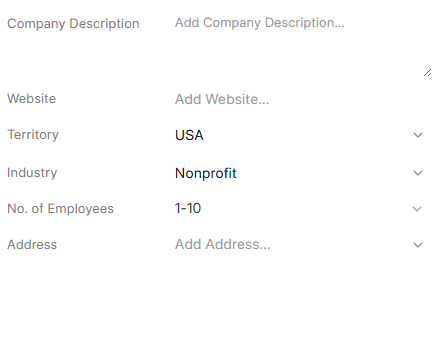
Thanks for sharing the screenshot. I see what you mean now. You’re disabling enrichment, not asking to remove those fields entirely, but the UI seems to hide them along with the feature. I checked the CRM field definitions and LinkedIn, Twitter and Facebook are already standard fields, so I wouldn’t create duplicates just to enter them manually. This looks more like a frontend visibility issue. Ideally, disabling enrichment should only disable automatic population, while keeping those fields…
The proposed solution would be to prevent direct amendment of an earlier submitted movement when later movements depend on it. For a backdated correction, the system should validate the component’s complete timeline and identify all dependent transactions. If the correction creates an overlap or invalid sequence, it should be blocked. The user would then need to either: Cancel and amend the dependent movements in reverse chronological order; or Submit authorized corrective transactions linked…
Before answering your questions - here is the organization sidebar. Enrichment is turned off, and with “Enrich” button greyed out you can’t press it, and evidently you can’t see the fields that are supposed to be enriched, so it’s impossible to fill them.
I like the direction of this proposal, especially keeping component movements separate from accounting transactions. One case I’d be interested in testing is a backdated correction after a component has already been transferred to another asset. Ideally, the system would validate the full movement history and flag conflicts without changing posted depreciation. Have you considered how those corrections would work when later transactions already depend on the original movement?
Hello Frappe Community, I would like to discuss a practical Asset Management requirement that may be relevant to organizations managing vehicles, machinery, buildings, production lines, and other complex fixed assets. Some Assets contain significant components that may require separate cost and depreciation tracking while remaining linked to a larger Primary Asset. Examples include: Vehicle → Engine or Transmission Vehicle → Engine → Major Engine Overhaul Building → HVAC System or Elevator…

A couple of honest pointers from having wired ERPNext up to Excel before. I haven’t come across a maintained Office 365 add-in for ERPNext I’d actually trust for two-way sync — the ones that float around tend to go stale. So I’d split your two use cases, because they pull in opposite directions. For the finance reporting side, Excel Power Query straight against ERPNext’s REST API is the clean path. Point it at your Query Reports (Trial Balance, GL, Cost Center analytics all work as report…
I went back through your original investigation, and I think this latest case needs to be separated from the earlier GL/PLE inconsistencies. For TOR-OFF-3214, if the invoice is cancelled and no longer appears in AR or the customer GL, I’d first check whether it’s actually contributing to the Sales Register and GSTR-1 totals, or just being displayed. Could you confirm the invoice’s docstatus, whether any active GL/PLE entries remain, and which report filters were used? I’d also check whether the…
I think this needs a server-side permission check rather than just a role or client script. I’d compare the Appraisal’s employee against the Employee record linked to the logged-in user. If it’s their own appraisal, allow Read but deny Write, Create and Delete. For other employees, check the Reports To relationship so managers can only edit appraisals for their actual direct reports. A custom has_permission hook would be a good starting point, but I’d also add server-side validation for the KRA…
I think you’re raising a fair point. Frappe CRM allows quite a bit of field customization, but changing the actual page layout is a different story. There’s already a GitHub issue (#2172) requesting UI extension hooks, including custom tabs, which sounds very close to what you’re looking for. For now, changes to the built-in tabs or the Organization page layout may still require frontend customization. The enrichment concern is interesting too. Disabling automatic enrichment shouldn’t prevent…